

This guide explains what builders and their teams should confirm before they order, so the sheets they receive match the job’s performance and documentation needs.
What do “Formply Australia standards” actually cover?
They cover how formply is made, how it is bonded, what it is permitted to be used for, and how it should be identified and documented. In practice, Formply Australia standards help builders compare products fairly, not just by price, but by suitability for concrete forming.
They also support consistency across suppliers, inspectors, and engineers when questions arise on site.
Which Australian Standards should builders check before buying formply?
They should check that the product aligns with the relevant Australian Standards typically referenced for formwork plywood, including requirements around plywood manufacture and structural performance. Formply Australia standards are often evidenced through supplier documentation, product branding, and test information.
If the project has an engineer’s specification, builders should match the product to that document first, then confirm the supplier’s compliance evidence.
How can builders confirm the correct bond type for wet concrete conditions?
They should confirm the plywood is suitable for repeated exposure to moisture and wet concrete, not just “exterior” in a marketing sense. Under Formply Australia standards, the glue bond and panel construction are crucial, because moisture cycling is where cheaper sheets often fail.
If the supplier cannot clearly state the bond classification and provide supporting documentation, builders should treat it as a red flag.
What does the face film and overlay quality mean for concrete finish?
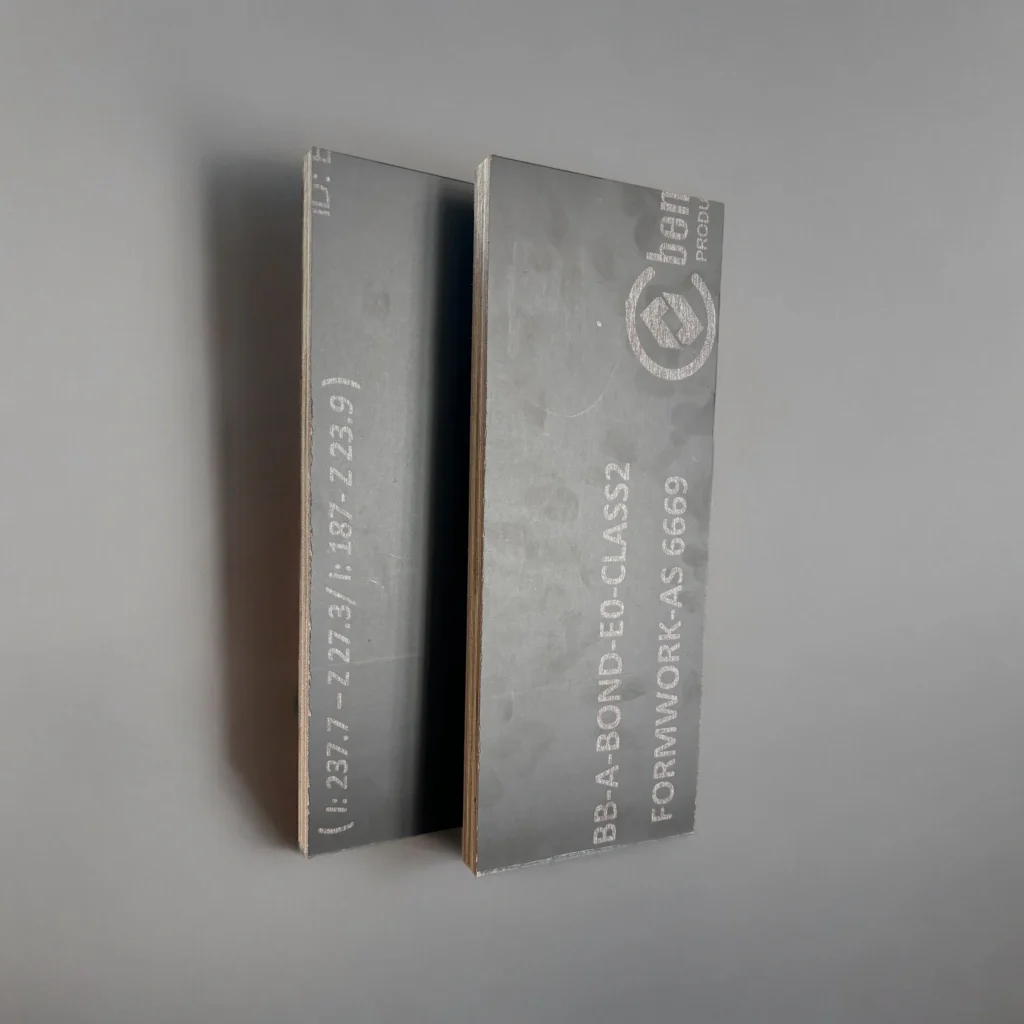
It determines how the formed concrete surface looks and how many reuses they can realistically get. Formply Australia standards push buyers to look beyond thickness and check film weight, face integrity, and edge sealing.
A higher quality overlay helps reduce grain transfer, patch marks, and early breakdown, especially on commercial pours where appearance and reusability are tied to cost.
How should builders interpret thickness, tolerances, and sheet flatness?
They should expect consistent thickness and stable flatness so the formwork remains accurate under load. Formply Australia standards are relevant because even small variations can create steps at joints, cause misalignment, and increase finishing time.
When ordering, builders should confirm the actual thickness range, not just the nominal figure, and they should store sheets flat and dry to avoid site-induced warp.
What markings should appear on compliant formply sheets?
They should look for clear edge or face branding that identifies the sheet as formply, along with key manufacturing and grade details. Formply Australia standards make traceability important, particularly when an inspector or principal contractor asks for proof of what was installed.
If sheets arrive unbranded or with vague stamps, builders should request clarification immediately and quarantine questionable stock until it is verified.
What documentation should suppliers provide at the time of order?
They should request product data sheets and supporting evidence for compliance claims, including details about intended formwork use and performance characteristics. Formply compliance documentation is important because site teams may need clear records to demonstrate that the selected material meets project requirements and has been properly assessed.
For larger projects, builders may also need batch traceability, test summaries, or a compliance statement suitable for their project’s quality system.
How do builders match formply selection to AS 3610 formwork expectations?
They should treat AS 3610 as the practical lens for selecting form-face materials, because it governs formed surface classes and formwork outcomes. Formply Australia standards intersect with this by ensuring the plywood itself is fit for forming, while AS 3610 guides the finish level the project expects.
If the specification calls for higher class finishes, they should choose higher grade face sheets, tighter jointing practices, and more conservative reuse plans.
How many reuses should builders assume, realistically, on Australian sites?
They should base reuse expectations on handling, release agents, edge protection, and exposure, not best-case marketing numbers. Formply Australia standards can indicate minimum suitability, but the actual lifecycle depends on whether crews avoid gouging, over-nailing, and water ingress.
In practice, disciplined storage, consistent release agent use, and edge resealing often deliver more value than chasing the cheapest sheet.
What edge sealing and cut protection steps should be required before first use?
They should seal all cut edges and penetrations as soon as sheets are trimmed or drilled. Formply Australia standards assume the panel is used appropriately, but unsealed cuts are where swelling, delamination, and early failure usually start.
Builders should require a simple site rule: any new cut gets resealed before the sheet returns to the deck, even if the pour is “only tomorrow.”
How should builders manage release agents to protect the formply face?
They should use a release agent compatible with film-faced plywood and apply it evenly and lightly. Formply Australia standards do not prevent face damage caused by poor chemical choice, pooling, or over-application.
Teams should avoid diesel or improvised mixes and instead follow the agent supplier’s instructions, because chemical attack and stuck concrete are common causes of face tear-out.
What common ordering mistakes cause non-compliant or unsuitable deliveries?
They often fail to specify the exact grade, branding expectations, documentation needs, and whether the sheets must meet a particular project requirement. Formply Australia standards are only useful if the order is written clearly enough for the supplier to match.
Another frequent error is ordering by thickness alone, then discovering the face quality, edge seal, or bond performance is not suitable for repeated formwork cycles.
What simple checklist should builders use before they place the order?
They should confirm suitability, traceability, and finish expectations in writing before payment is released. This is the easiest way to make Formply Australia standards actionable on site.
- Confirm the product is specified for concrete formwork use and wet exposure
- Confirm bond classification and intended application
- Confirm sheet thickness, tolerance expectations, and size
- Confirm film-faced overlay quality and edge sealing method
- Confirm required sheet markings for traceability
- Request product data sheet and compliance evidence
- Confirm delivery protection, storage guidance, and damage process
What should builders do if the delivered formply does not match the order?
They should stop the sheets being used, document the issue with photos, and request written clarification from the supplier. Formply Australia standards are most effective when builders treat mismatches as a quality hold point, not a problem to “work around.”
If the project is governed by strict QA or engineering sign-off, they should notify the relevant parties early to avoid rework, delays, or rejected pours.
How should builders store and handle formply to stay within expected performance?
They should store it flat, off the ground, under cover, and keep it dry between uses. Even when Formply Australia standards are met at purchase, poor site handling can quickly erase the benefits.
They should also lift sheets properly, avoid dragging across rough slabs, limit face damage from tools, and keep edges protected during transport and stack movement.
What is the practical takeaway before ordering?
They should treat formply as a critical forming system component, not a commodity sheet. When builders insist on clear markings, proper documentation, and fit-for-purpose performance, Formply Australia standards become a straightforward buying filter rather than a confusing compliance topic.
Before ordering, they should confirm the job’s finish expectations, match the sheet to wet exposure demands, and require traceability so the product can be defended if it is questioned later.
FAQs (Frequently Asked Questions)
What do Formply Australia standards cover in formwork plywood?
Formwork plywood standards cover important aspects such as manufacturing processes, bonding methods, permitted applications, identification, and documentation requirements. These standards help builders compare products more consistently based on durability, surface quality, and suitability for concrete forming, while supporting greater consistency between suppliers, inspectors, and engineers.
Which Australian Standards should builders verify before purchasing formply?
Builders should check that formply products comply with relevant Australian Standards related to plywood manufacture and structural performance. Compliance is typically evidenced through supplier documentation, product branding, and test information. Matching the product to engineer specifications and confirming supplier compliance evidence is essential.
How can builders confirm the correct bond type for wet concrete conditions?
Builders must ensure the plywood is suitable for repeated exposure to moisture and wet concrete by verifying the glue bond classification and panel construction as per Formply Australia standards. Suppliers should clearly state the bond type with supporting documentation; absence of this information should be treated as a red flag.
Why is face film and overlay quality important for concrete finish?
Face film and overlay quality determine the appearance of the formed concrete surface and the number of reuses achievable. Higher quality overlays reduce grain transfer, patch marks, and early breakdown, which is critical for commercial pours where aesthetics and reusability impact cost. Formply Australia standards encourage buyers to assess film weight, face integrity, and edge sealing beyond just thickness.
What markings indicate compliant formply sheets?
Compliant formply sheets feature clear edge or face branding identifying them as formply along with key manufacturing and grade details. These markings ensure traceability vital for inspections or contractor verification. Unbranded or vaguely stamped sheets should prompt immediate clarification requests and quarantine until verified.
What documentation should suppliers provide when ordering formply?
Suppliers should provide product data sheets and evidence supporting compliance claims including intended use and performance characteristics. For larger projects, batch traceability records, test summaries, or compliance statements aligned with project quality systems are necessary to demonstrate due diligence under Formply Australia standards.
