
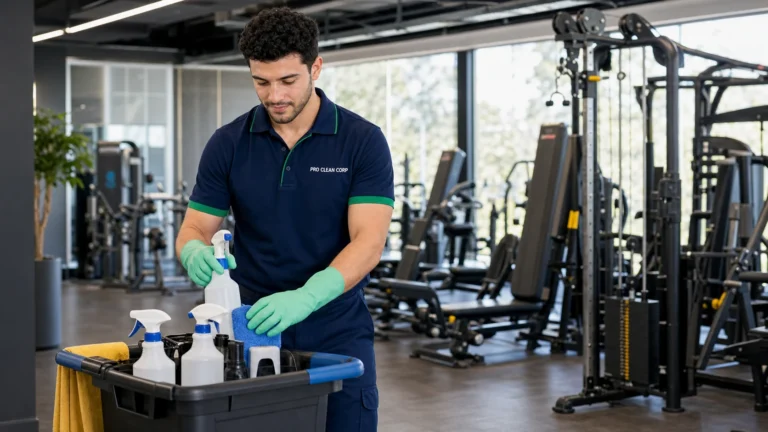
For most sites, the safest baseline is to sanitise high touch equipment multiple times per day, with extra attention during peak periods. The right schedule depends on foot traffic, member behaviour, ventilation, and the type of equipment being used across the floor.
In practice, many operators pair frequent wipe downs with a documented routine from gym cleaning Sydney professionals to keep standards consistent, audit ready, and easy for staff to follow.
What does “sanitise equipment” actually mean in an Australian gym setting?
It means using the right product and process to reduce germs on surfaces members touch constantly. In Australian gyms, that usually includes a neutral detergent clean when needed, followed by a hospital grade or TGA listed disinfectant used as directed.
It is not the same as a quick wipe with a dry towel. It requires contact time, coverage of handles and touch points, and routine checks so the process is done properly.
How often should high-touch equipment be sanitised each day?
High touch items should be sanitised several times daily, with extra rounds during busy windows like before work and after work. That includes dumbbells, kettlebells, benches, cable handles, treadmill rails, rower handles, mats, and pin selectors.
Many sites using gym cleaning Sydney services set minimum intervals such as every 2 to 4 hours, then increase frequency when classes are back to back or when the floor is packed.
How often should cardio machines be sanitised compared to weights?
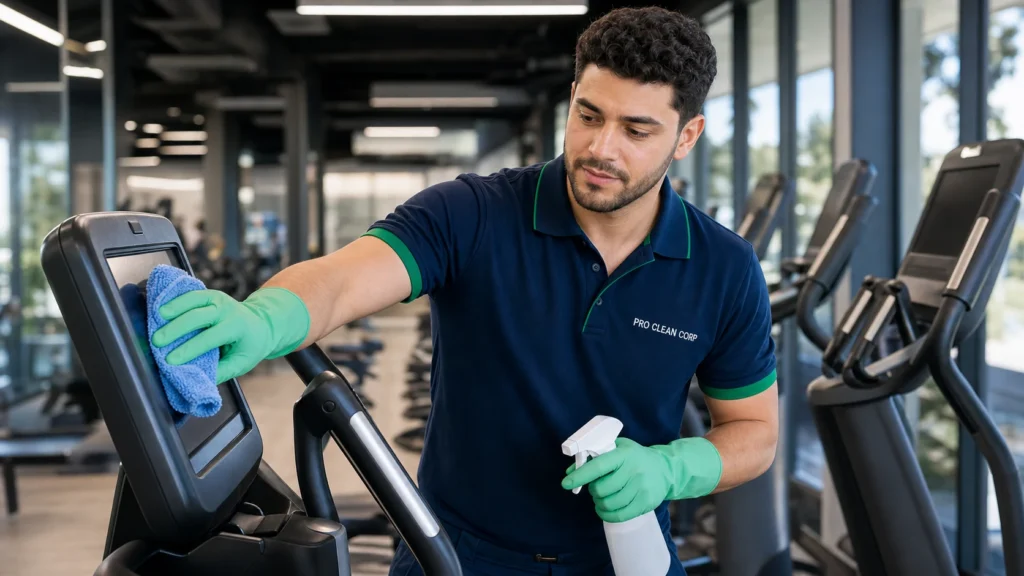
Cardio machines often need more frequent attention because of sweat and constant hand contact. Treadmill handrails, speed buttons, touchscreens, and bike handles should be sanitised repeatedly through the day.
Weights areas still need frequent sanitising, but the approach is broader. Staff and members should target grip points and bench surfaces, while cleaners rotate through zones as part of a structured gym cleaning Sydney plan.
How often should free weights and benches be sanitised?
Benches and free weights should be sanitised continuously during trading hours, then thoroughly at close. These are among the most shared items in any facility, and they are often used without towels or with minimal wipe downs.
Many gyms support this with visible wipe stations, signage, and a cleaner led loop. A consistent gym cleaning Sydney routine helps reduce missed items, especially around busy strength circuits.
How often should group fitness and studio equipment be sanitised?
Studio gear should be sanitised after each class, not just at the end of the day. That includes mats, blocks, straps, steps, barbells, and shared microphones or remotes.
If classes are scheduled tightly, operators often build a short cleaning window into timetables. Some rely on instructors for immediate resets, supported by scheduled gym cleaning Sydney visits for deeper rounds.
How often should lockers, change rooms, and bathrooms be sanitised?
These areas should be sanitised multiple times daily, with extra checks during peaks. Tap handles, cubicle locks, benches, hair dryer buttons, and door hardware all count as high touch surfaces.
Many Australian facilities schedule change room touch point sanitising every 1 to 3 hours. Where staffing is limited, a gym cleaning Sydney provider can help set up a realistic frequency that still protects members.
How often should reception counters, EFTPOS terminals, and access scanners be sanitised?
These touch points should be sanitised frequently throughout the day because they are used by almost every visitor. That includes reception counters, pens, iPads, key fobs, turnstiles, and fingerprint or keypad systems.
A good approach is to sanitise these items at least every 1 to 2 hours, plus whenever they look soiled. Many sites formalise this in their gym cleaning Sydney checklist to avoid relying on memory.
How should foot traffic and peak times change the sanitising schedule?
More people means more touch events, more sweat, and more risk of surfaces being missed. Busy CBD locations, large franchises, and 24/7 gyms often need higher frequency than smaller studios.
Operators commonly increase sanitising during 5 am to 9 am and 4 pm to 8 pm. A flexible gym cleaning Sydney program can add extra rounds on Mondays, after public holidays, and during seasonal surges.
What’s the minimum daily routine most gyms should follow?
At minimum, most gyms should run three layers: continuous member wipe downs, staff touch point rounds, and a daily close clean. This keeps surfaces safe during trade and resets the site properly overnight.
A simple baseline many facilities adopt is: open clean, midday round, peak time rounds, and close clean. Pairing that with a documented gym cleaning Sydney schedule makes it easier to train staff and prove compliance.
Which products and methods work best for equipment without damaging it?
They should use products suitable for vinyl, rubber, powder coated metal, and touchscreen surfaces, and follow label directions for dwell time. Harsh chemicals can crack upholstery, dull coatings, or damage screen films.
Microfibre cloths, colour coded wipes, and spray and wipe methods are common, but they must match the disinfectant’s required contact time. Many gym cleaning Sydney providers also rotate products to suit different zones and materials.
How can they tell if they’re sanitising often enough?
Members will notice sticky grips, visible grime on rails, and strong odours first. Operators can also track complaints, inspect high touch points daily, and monitor usage patterns to see where cleaning falls behind.
A simple audit helps: check pin selectors, treadmill buttons, bench seams, and bathroom hardware at set times. Many gym cleaning Sydney teams provide logs so managers can see what was done and when.
What role should members play versus staff and cleaners?
Members should wipe equipment after use, but facilities should not rely on that alone. Some members forget, rush, or use poor technique, so staff and cleaners need to run scheduled rounds regardless.
Clear signage, stocked wipe stations, and staff reminders improve compliance. The strongest outcomes come when member habits are backed by a reliable gym cleaning Sydney system that does not depend on perfect behaviour.
How should 24/7 gyms manage sanitising when staffing is limited?
They should build a routine that does not rely on constant supervision. That means more wipe stations, clearer prompts, and a cleaning schedule timed to the busiest hours, even if staff are not present overnight.
Many 24/7 operators use contracted after hours cleans plus daytime touch point rounds. A tailored gym cleaning Sydney arrangement can focus on high risk areas and set realistic service times.
See Also : What Standards Do Clinical Cleaning Services Follow for Infection Control?
What should a written sanitising checklist include for Australian facilities?
It should list zones, touch points, frequency, responsible person, products used, and how completion is recorded. It should also include what to do for spills, bodily fluids, and visible soiling.
A clear checklist protects staff and members, and it helps managers prove routines were followed. Many sites develop these documents with gym cleaning Sydney specialists who understand gym specific surfaces and traffic patterns.
How can they improve hygiene without overcleaning or wasting labour?
They should prioritise touch points and time the work to usage, rather than applying the same routine everywhere. Overcleaning low use areas can waste time while high use zones fall behind.
Zoning works well: cardio, free weights, studios, reception, and amenities, each with its own frequency. This is where a gym cleaning Sydney schedule can be adjusted to match actual member flow.
When should they bring in professional cleaners rather than relying on staff?
They should bring in professionals when staff cannot keep up, when standards slip, or when they need documented routines across multiple sites. Professionals also help with deeper cleaning tasks like machine bases, vents, grout lines, and upholstery care.
Many facilities use staff for quick rounds and outsource the daily reset and periodic deep cleans. Done well, gym cleaning Sydney support reduces downtime, boosts member confidence, and keeps the facility consistently presentable.
How often should deep cleaning happen on top of daily sanitising?
Most gyms benefit from a weekly to fortnightly deep clean for hard to reach areas, with monthly attention to vents, high dust ledges, and machine undersides. Deep cleaning is where built up grime that daily wipes miss is removed.
Sites with heavy traffic, coastal moisture, or lots of group training may need more frequent deep cleaning. Many choose to add this into their gym cleaning Sydney scope as a separate, scheduled service.
What is a practical sanitising schedule most Sydney gyms can follow?
A practical schedule is to sanitise touch points every 2 to 4 hours, sanitise studios after each class, and complete a thorough clean at close. Bathrooms and reception should be checked more often, especially during peaks.
The best schedule is the one they can maintain every day. Many facilities keep it simple, train staff well, and partner with gym cleaning Sydney teams to deliver the heavier resets and documented consistency.
